
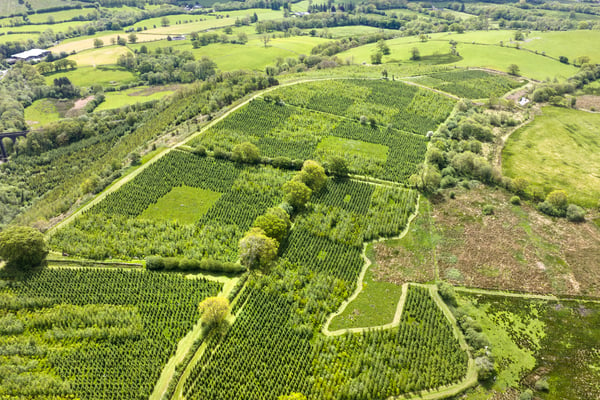
First results from landmark study show the power of nature-based solutions
We’re working with an innovative environmental charity to explore new ways to tackle climate change
Reforestation is one of the most effective tools we have to fight climate change. With funding from L&G, science-based charity The Carbon Community has tested two nature-based solutions at Glandwr Forest in Wales. Their goal: to see how these methods can help forests capture more carbon.
The team has now reached a major milestone. A new peer-reviewed study shows these approaches can boost carbon capture by 13% to 27% in the first four years of native woodland growth.
How does it work?
The Carbon Community is testing two interventions: enhanced rock weathering and microbial enrichment.
Enhanced rock weathering
This means spreading crushed silicate rock – basalt from a local mine – around the trees. As the rock breaks down, it reacts with rainwater. That forms calcium carbonate and removes carbon dioxide.
Scientists did see atmospheric carbon captured because of rock weathering, but it was slower than anticipated. They found a bigger effect from a secondary benefit: the rock minerals made soil nutrients more available, which helped trees grow faster. Trees treated with rock dust stored 3,700 kg of carbon per hectare, compared to 2,900 kg for untreated trees.
Microbial resistance
This involves adding soil from mature forests to the soil of new trees. Healthy forests rely on communities of beneficial microbes, which often don’t exist in former farmland used for reforestation. By restoring these microbes, the team helped trees thrive. This treatment added an extra 380 kg of carbon capture per hectare compared to untreated trees.
On average, native broadleaf trees with microbial enrichment grew 13% more above ground after four years, compared to the control group. While this didn’t reach statistical significance overall, some species – like oak and spruce – showed dramatic gains. Others, like alder, didn’t respond. This finding suggests more targeted approaches to soil sampling and species matching could deliver even better results.
Both treatments together
Surprisingly, applying both of them together didn’t speed up growth. One theory is that the nutrients from rock weathering reduced the trees’ need for microbial support. Researchers need to do more work to confirm this.
Looking ahead
The carbon gains so far remain small because the trees are young. But if these effects continue as they mature, they could transform early tree growth and significantly increase carbon capture in the long term.