
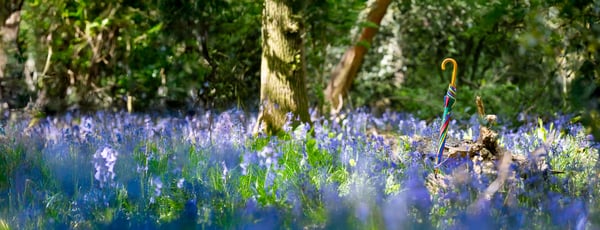
Pudding Wood, Surrey
Transforming 155 hectares of low-grade agricultural land in southern England to new woodland and biodiverse habitats designed to sequester carbon dioxide and increase biodiversity over the long term.
About the project
The UK is now one of the most nature depleted countries on Earth1, and the impacts are increasingly being felt – from flooding to air and water pollution.
To combat the risks arising from climate change and nature loss, new opportunities are emerging around nature-based solutions.
L&G has expertise in developing real assets such as affordable housing. We are now building on this expertise by developing nature-based solutions.
Our aim is to demonstrate through Pudding Wood that we can invest in the development of high-quality biodiversity and carbon credits, while also delivering positive outcomes for local communities.
April 2026, Community update
Phase 1 complete
April sees the successful completion of Phase 1 of our works. This winter we have:
We are also starting works on fencing. Fencing is necessary to keep deer out of some of the larger areas. This will be a 1.8 metre fence. The fence will also be removed once the trees have sufficiently matured.
Ground Control, our contractor, will be leaving the site in early May.
Getting ready for Phase 2
In April, we will be turning our attention to our Phase 2 works. These will start in August this year and will cover additional tree planting and habitat creation.
Designing a new community woodland
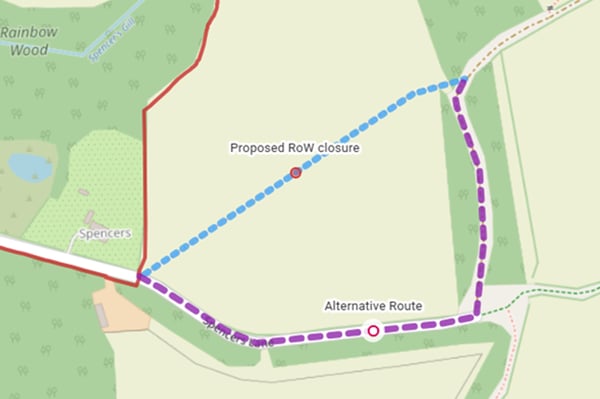
As part of Phase 2, we are proposing the development of a community woodland. To help shape its design, we will be holding an event at Providence Chapel, Charlwood to discuss the proposals with local residents.
Date: Thursday, 14 May 2026
Time: 12.00pm to 8.00pm
The L&G design team will be available throughout the day - please join us to help shape the design of this new community space.
The area for this woodland is shown in the map below:
Woodland Works
We will begin works on some of the existing woodland on the site in mid-February. These works will involve the removal of pheasant pens, the thinning of trees and the creation of woodland glades.
The works are aimed at improving woodland biodiversity. Removal of pheasant pens will reduce disturbance in the woodland. Creation of clearings will introduce light and warmth into parts to the woodland, allowing a wider range of plants and animals to be present. The works will also improve woodland structure allowing a wider age range of trees to be present as well as creating a mix of open and closed canopy conditions. The works will help improve the long-term resilience of the woodland.
Wood generated from thinning will be retained on site – with the majority placed on the forest floor in order to increase the amount of dead wood present. This again creates new habitat to form.
Our plan for biodiversity
We aim to protect and enhance existing habitats and species of importance and add to these through habitat creation aimed at benefitting a range of key species, which will make a significant contribution to the objectives of the Local Nature Recovery Strategy.
Existing habitats
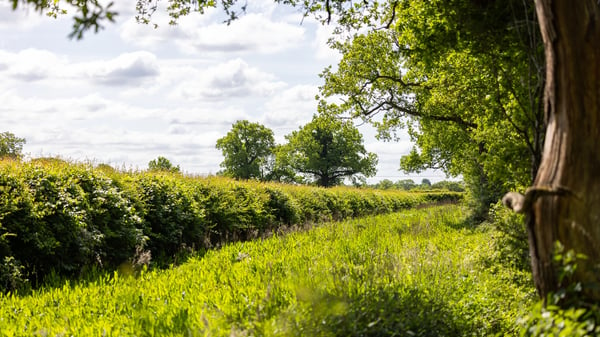
The Site supports priority habitats, including:
Future habitats
New habitats we will create include:
Supporting priority species
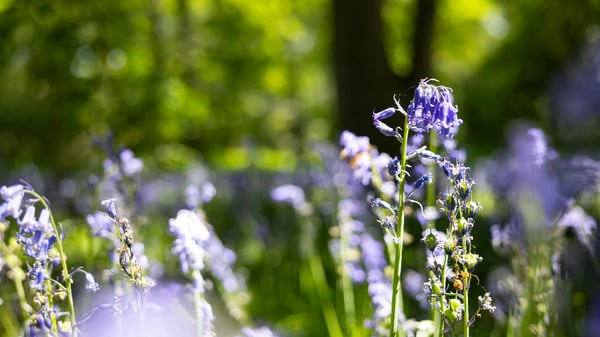
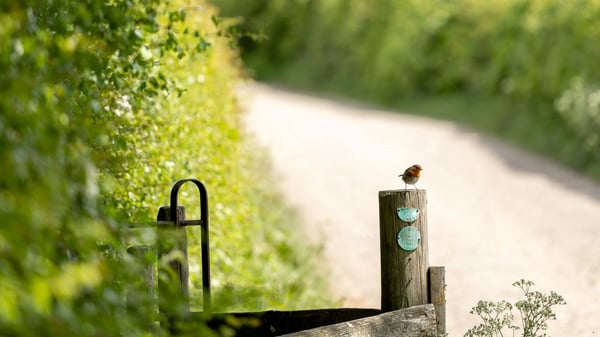
Local priority species we're supporting include:
Woodland creation
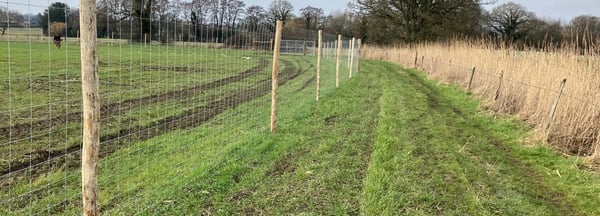
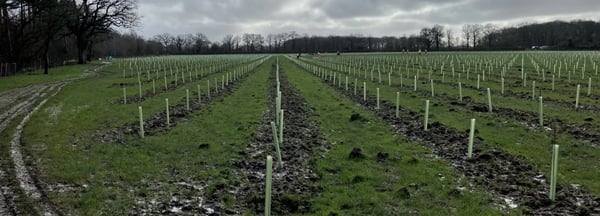
The team installed a deer-fenced enclosure before they started planting trees.
The enclosure protected the young trees from browsing roe, fallow and muntjac deer. This helped the trees establish and meant we didn’t need larger individual tree guards.
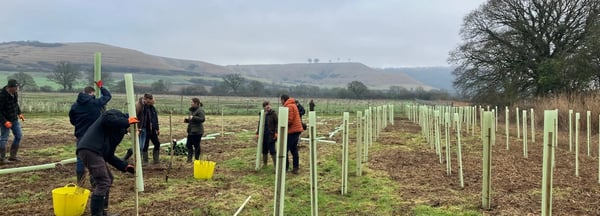
We planted mixed native trees in individual tubes.
In the first planting season, volunteers helped us plant 100,000 trees. Each sapling was around 30 centimetres tall at the time of planting. We planted them with small spades before firming them in. This meant we didn’t unnecessarily damage the local environment.
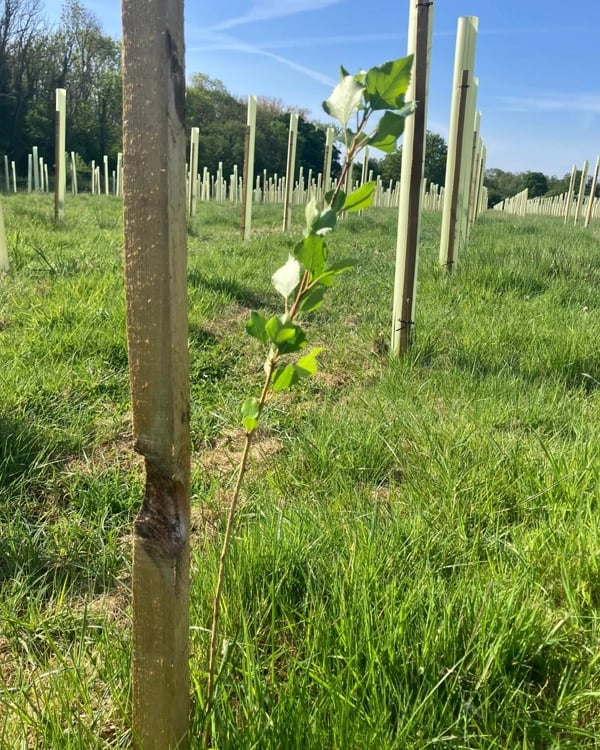
We completed a successful planting season, establishing Native Black Poplars. They’re one of the UK's rarest tree species, making them a conservation priority.
The focus of the project then turned to summer activities, like mowing. We also began to get ready for our second winter of planting.
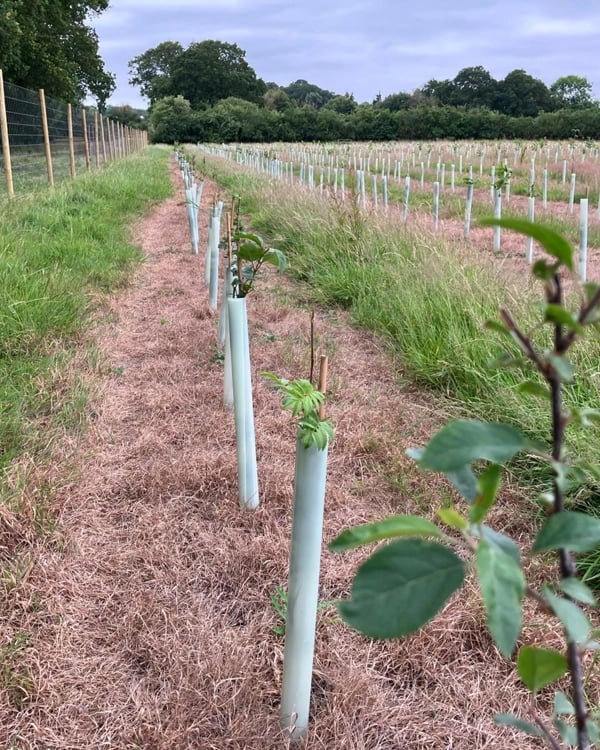
This summer, our mixed native woodland will fully establish itself inside the deer fences. We’ll start creating our plans for the for the community areas of the site.
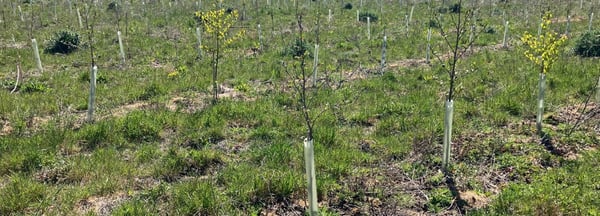
From the autumn, our preparation for the second winter of planting will be in full flow.
We’ll start preparing the ground for 40,000 more trees. They’ll help create a community woodland and orchard for local residents.
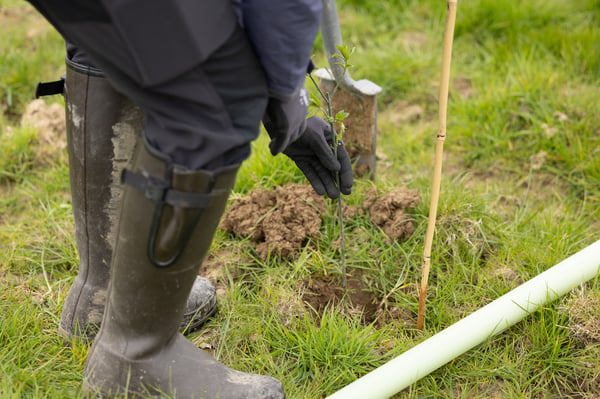
We’ll plant the next 40,000 saplings whilst the ground is wet. This will give the young saplings the best chance of survival.
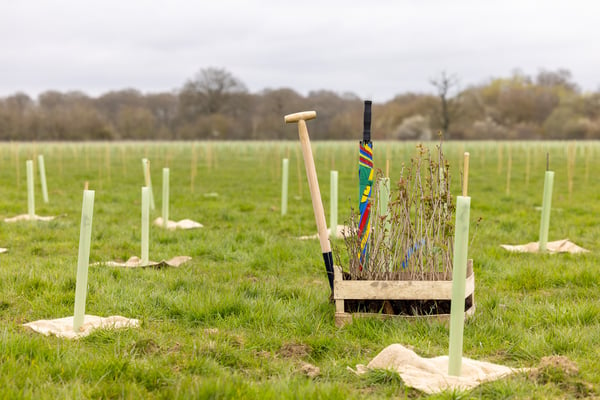
By spring, we’ll have finished planting and our main programme of woodland development work will have finished. Our focus will then turn to the site's ongoing land management.
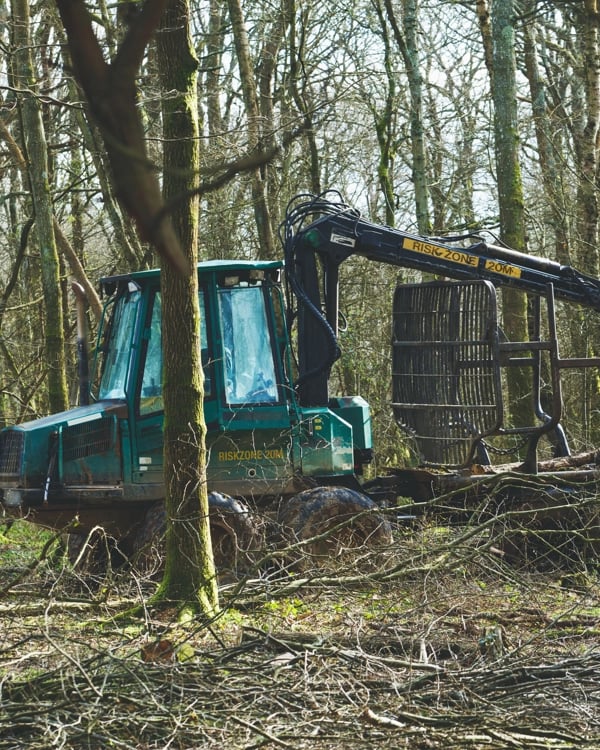
Going forward we will use low-impact machinery to coppice the 20-year-old native woodland.
This will create glades and coppices, which will benefit wildlife and help introduce different kinds of space within the woodland. Dormice, bats and butterflies will enjoy those spaces and general new growth in the woodland.
Local community benefit
The idea? Woodland or orchard space for community access and benefit.
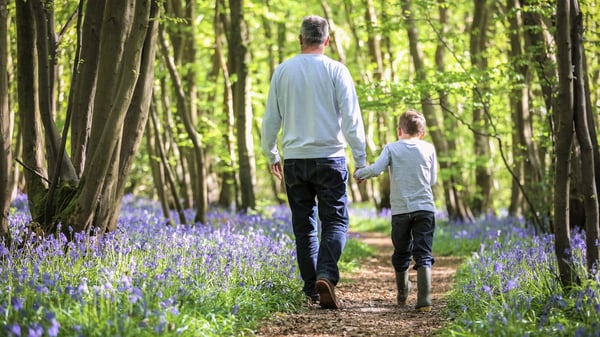
Potential outcomes:
Contact us
If you have any questions or would like to learn more about the project, please email: natureinvestments@landg.com